On their return to school, administrators are unlikely to consider water. They need to get classrooms ready with supplies and make final schedule adjustments. Furthermore, athletic programs, cafeterias, student housing, and multiple campus offices each have their own lists to address.
Even so, drinking water should be part of that discussion.
Students and staff use the water stations throughout the day.
Between classes, they refill their bottles, drink water after practice, use it during long study sessions, or grab a bottle from the office cooler before a meeting. When the water tastes bad, flows slowly, or comes from an older fountain they don’t trust, they opt for bottled drinks instead.
The impact goes beyond convenience, as it can influence daily hydration habits across the campus.
Water Quality Is a Growing Campus Concern
Schools and colleges have seen water quality become a bigger issue as families pay closer attention. Issues such as lead, PFAS, old plumbing, and public water reports are no longer discussed exclusively by facilities staff. Instead, parents, students, and employees are asking better questions about the water available in the buildings they use every day.
A 2026 Culligan report on ZeroWater Technology examined publicly available data on lead and PFAS in 50 college towns in the United States. The study found that 92 percent of the communities examined had at least one of the contaminants under investigation.
This doesn’t mean all school buildings share this concern, but it does mean water quality should be checked before a complaint, a quick shift to bottled water, or a loss of trust in on-site drinking water facilities.
Why Access Matters As Much As Filtration
Although schools and campuses need clean water, they also need water people will actually use.
In a far hallway, a water station provides only limited help during a short journey. After gym class, a cooler that can’t keep drinks cold becomes annoying. In a busy shared environment, a dispenser that needs frequent touching may seem less attractive.
Good access means the system matches how people actually move around campus. Consider where people gather and how often they refill. Different arrangements will be needed for student lounges, athletic areas, libraries, offices, and the common spaces in housing.
Students will be more likely to choose water during the day if it is easy to get and pleasant to drink.
The PW90 Fits High-Traffic School Settings
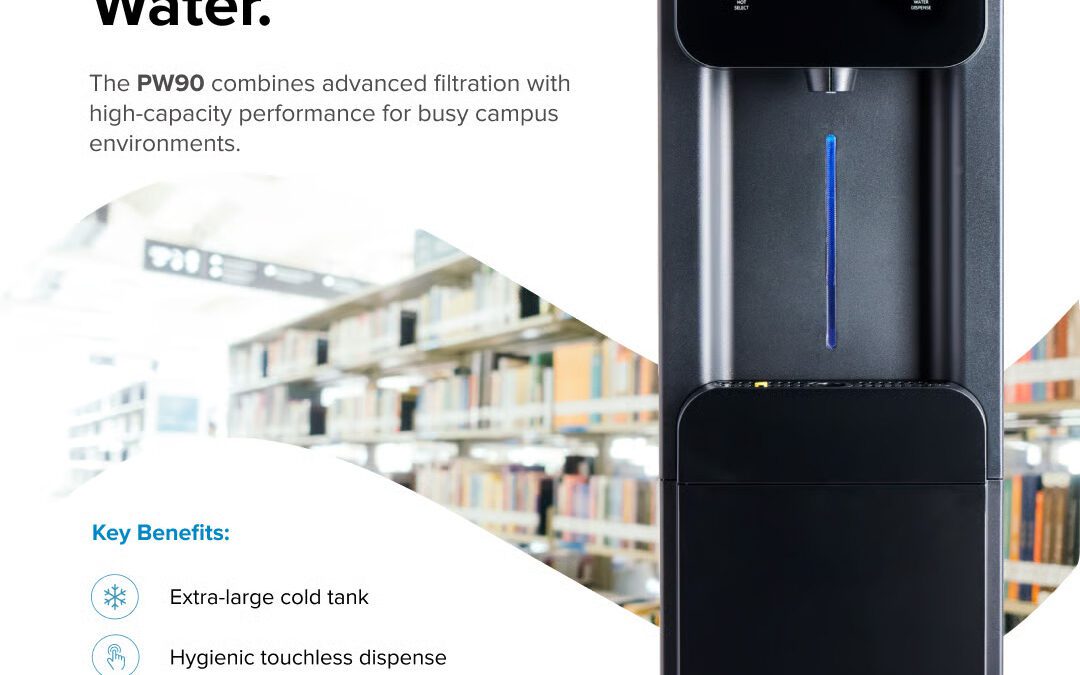
The PW90 suits busy environments because water demand can vary in waves, making it a strong choice for schools, colleges, student housing communities, athletic facilities, and campus offices.
The large cold storage tank is useful in areas where many people might fill bottles in a short time, and touchless dispensing is sensible within shared spaces since users can take water with minimal contact with the machine.
For schools, this combination is important. The system must be easy to use every day, reliable during busy periods, and clean enough to help students and staff feel confident.
Reverse Osmosis Offers Another Layer Of Confidence
The PW90 incorporates advanced reverse osmosis filtration, which matters for campuses focused on water quality because reverse osmosis is one of the filtration methods typically used to reduce a wide variety of contaminants.
The PW90 has also been given NSF/ANSI 58 certification for total PFAS reduction; this certification provides schools and the people making decisions about campuses with a more clear basis for comparing the different options rather than having to depend on general claims regarding ‘better water’.
Concerns about PFAS are far from gone. Even if a local water report appears acceptable, many schools still want additional treatment at the point where students and staff drink. As part of that plan, you can include a bottleless system with certified PFAS reduction.
Self-Cleaning Technology Helps Shared Spaces
Heavily used water stations require consistent attention; in a school or on a college campus, this can be difficult because many people use the equipment throughout the day.
The PW90 is equipped with activated oxygen self-cleaning technology, which helps to keep the system running more cleanly. However, this feature does not replace regular maintenance; it simply helps facilities keep equipment in good condition between routine service visits.
Admins and facility managers can feel less concerned. The water station is used often and designed with hygiene in mind.
Better Water Can Reduce Dependence On Bottles
Many schools and university campuses are trying to cut down on plastic waste. Although bottled water may seem convenient, it takes up storage space and creates a continual need to dispose of or recycle the bottles.
Students and staff can use a bottleless cooler to refill their reusable bottles at any time of the day. This helps create a cleaner campus while making access to water more reliable. It also prevents the problem of running out of bottled water during practices, meetings, or events.
If a station provides cold, great-tasting water, people are more likely to get into the habit of refilling their bottles.
A Smart Back-To-School Upgrade
Now is a good time to review whether the existing water system still suits the building. Are the fountains currently in use? Are students drinking bottled water because they don’t like the taste? Can staff easily access water during the day? Can the athletic areas cope during busy times?
The PW90 provides schools and college campuses with a better solution to those questions. It has advanced reverse osmosis filtration, is certified under NSF/ANSI 58 for total PFAS reduction, features touchless dispensing, includes activated oxygen self-cleaning, and has a large cold-water tank, making it suitable for places where many people use the same water station every day.
Michigan Clear Water can help schools, campuses, student housing communities, and athletic facilities choose a bottleless water solution that supports better hydration, cleaner shared spaces, and greater confidence in the water available across campus. Contact one of our locations in Wixom or Brighton to get started with a free trial and experience the convenience and water quality of a bottleless system.